
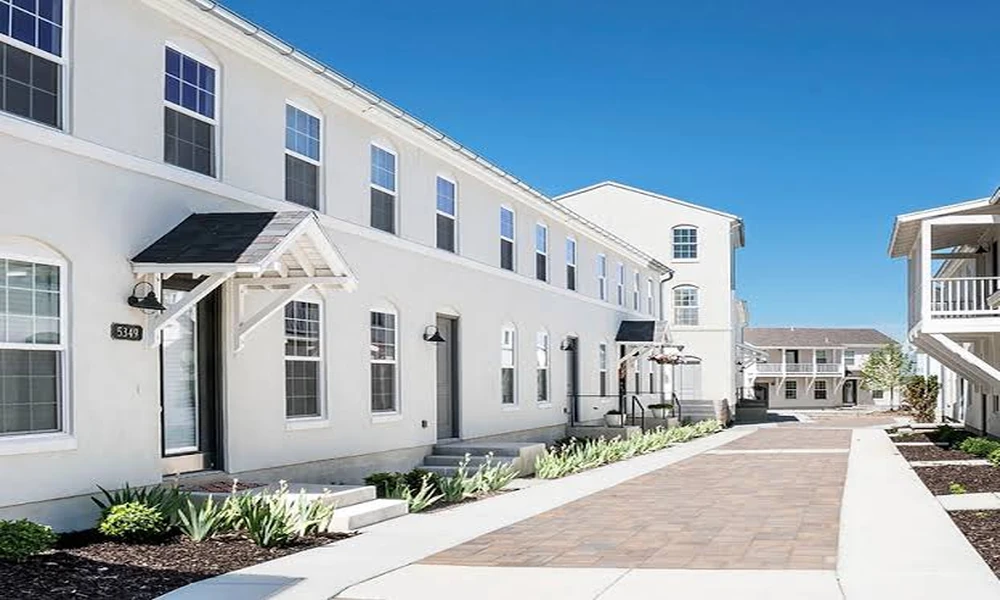
The housing types that once defined North American neighborhoods – the duplex beside a craftsman bungalow, the fourplex tucked behind a mature tree line, the stacked townhouse on a corner lot – quietly disappeared from most zoning codes over the second half of the twentieth century. Their absence helped produce the affordability crisis now shaping policy discussions from Vancouver to Toronto. Missing-middle housing, the range of low-rise, multi-unit forms that sit between a detached home and a mid-rise apartment block, is drawing renewed attention from developers, planners, and investors who recognize its considerable practical advantages.
A Wider Range of Attainable Price Points
Missing-middle housing adds units at price points that neither detached single-family homes nor large condominium towers typically reach. Smaller buildings cost less to construct per unit, and their rental or sale prices reflect that. Households that earn too much to qualify for subsidized housing but too little to afford the market’s higher end finally have viable options. That broadens access across income brackets without requiring government subsidy at every turn, which matters enormously in markets where affordability pressures have persisted for years.
Efficient Use of Existing Infrastructure
One of the most compelling arguments for missing-middle development is fiscal. Adding units to established neighborhoods puts existing roads, transit lines, water systems, and schools to fuller use. Municipalities avoid the substantial capital costs of extending infrastructure into greenfield areas. Research from the Brookings Institution has long emphasized how compact, infill-oriented growth produces stronger fiscal returns for cities than peripheral sprawl. Missing-middle housing sits at the center of that argument, modest in scale but significant in aggregate impact.
Neighborhood Character Preserved and Strengthened
Unlike large apartment towers, missing-middle buildings rarely disrupt the visual rhythm of a street. Their height, massing, and setbacks align with surrounding structures, so the neighborhood’s identity remains intact even as its density grows. More residents mean more foot traffic for local businesses, stronger transit ridership, and a more active civic environment. Experienced developers and finance professionals, among them figures like Alain Cogan, recognize that projects sensitive to neighborhood context tend to navigate the approvals process more smoothly and earn stronger long-term community support. As Principal and President of Oikoi Living, a Toronto-based purpose-built rental housing developer, and founder of Cogan Financial Capital Group Ltd., Alain Cogan brings extensive experience to the field.
Genuine Environmental Gains
Compact housing in walkable, transit-served locations reduces per-capita energy use and vehicle dependence. Shared walls lower heating and cooling loads. Shorter commutes cut emissions. The International Energy Agency has documented the significant role that building design and urban form play in national emissions profiles. Missing-middle housing, precisely because it clusters people near services and transit, contributes meaningfully to those reductions without requiring residents to sacrifice comfort or community in the process.
A Stable, Long-Horizon Investment
Smaller multi-unit projects carry manageable timelines and proportionate capital exposure. They attract steady, income-oriented investors who prioritize durable returns over speculative appreciation. That investor profile tends to support buildings that are well maintained and professionally managed, outcomes that benefit both tenants and surrounding property owners. The asset class rewards patience, discipline, and market knowledge over short-term opportunism.
Missing-middle housing does not resolve every dimension of the affordability challenge, but it addresses the structural gap between extremes with uncommon efficiency. For developers, investors, and communities committed to durable, livable urban growth, it offers a proven and principled path forward.